Use case
Stop managing cash flow blind: the right collection and payment decisions with a Power BI dashboard
How a Power BI dashboard gives a clear view of cash flow, to make better decisions and anticipate incoming collections and outgoing payments.
2 min readAbderrahmane CHAFI
- Power BI
- Data visualisation
- Business Intelligence
- Finance

The month-end that comes at the wrong time
On the 28th of the month, all is well. The account balance is fine, the figures are reassuring. Three days later, a supplier asks to be paid, salaries have to go out, and there is not enough money in the account to settle everything at once. Nothing changed in the business between those two dates. What changed is that this cash shortfall had not been anticipated.
A company does not die because it loses money. It dies because it no longer has the means to pay at the moment it has to pay.
The problem is not Excel, it is the lack of management
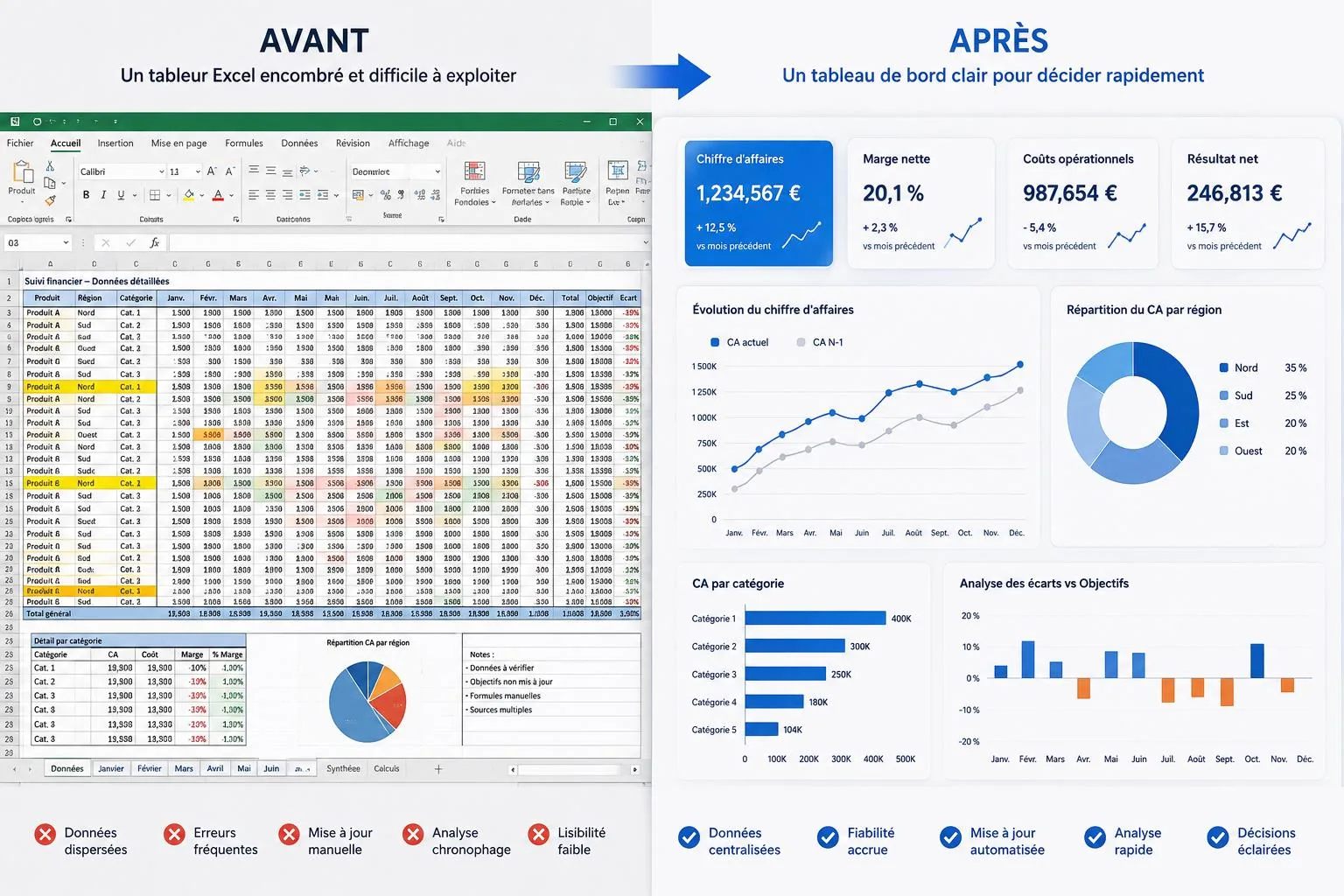
Most finance teams track their cash flow with an Excel file updated once a week, sometimes once a month. In between, invoices pile up and late payments set in silently. The spreadsheet is already out of date by the time it is sent.
Adding another tab or formula fixes nothing. What is missing is a consolidated, up-to-date view of what comes in, what goes out and what is still to come.
The trigger came from a very real case
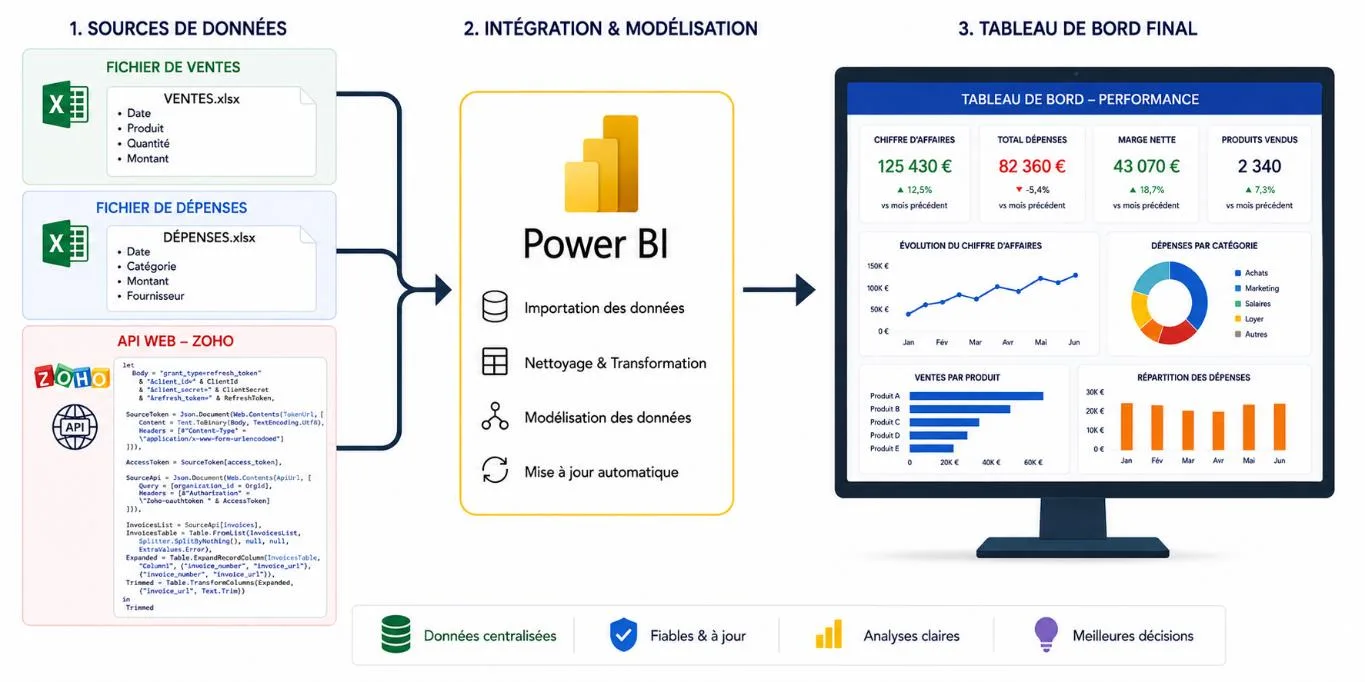
This observation is not theoretical. It comes from a real project, at a company that managed all its invoicing in Zoho. Zoho does offer its own dashboards, but these views remain standard and fixed: they do not answer the real questions a finance team asks every day — how much is still to be collected this month, which customers are dragging their feet, where the money is really going. Without those answers, decisions took longer to form.
It was this specific gap that led to building a custom Power BI dashboard, connected to invoicing and expense data, designed around cash flow questions rather than generic reports.
What a dashboard designed for decision-making changes
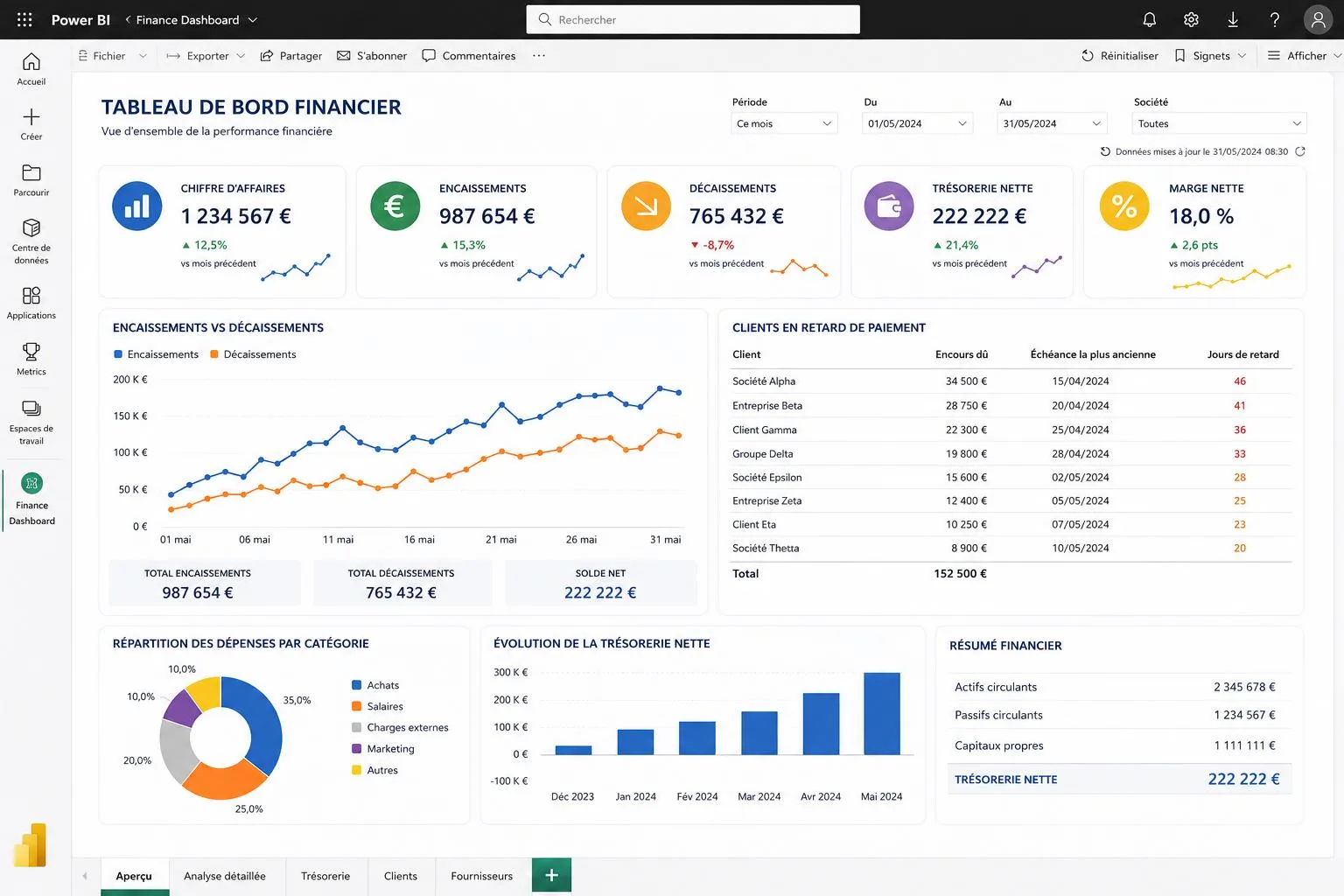
A good cash flow dashboard directly answers the questions a finance team asks every week:
- How much actually came in this month, and how much is still to be collected?
- Which customers pay late, and how much does that represent?
- Where is the money going, item by item?
- What is the cash position right now, and how is it changing month after month?
Anticipating rather than reacting
The real value of a cash flow dashboard is not to record the past but to anticipate what is coming. By tracking the balance month after month, an upcoming squeeze can be spotted weeks before it becomes a real problem.
Cash flow no longer dictates decisions in a rush: the finance team decides ahead of time, with reliable figures in front of it.