Use case
From OCR to IDP (Intelligent Document Processing): how document processing is transforming the supply chain
OCR or IDP? A document processing pipeline, a comparison with generative AI, GDPR issues and a benchmark of IDP solutions for the supply chain.
3 min read
- IDP
- OCR
- Mindee
- Supply chain
- IA
In a world where the pace of trade keeps accelerating, companies face a paradox: their most critical processes — supplier orders, invoices, transport documents — still rely on unstructured documents, processed manually or semi-automatically.
The supply chain is on the front line. Every Proforma Invoice not processed in time, every keying error on a product line, every delay in approving an order translates directly into operating costs, late deliveries or stock-outs.
For years, OCR (Optical Character Recognition) was the standard answer. Today, a new generation of solutions — Intelligent Document Processing (IDP) — is redefining what “processing a document” means.
1 - OCR vs IDP — The paradigm shift - Understanding why OCR is no longer enough
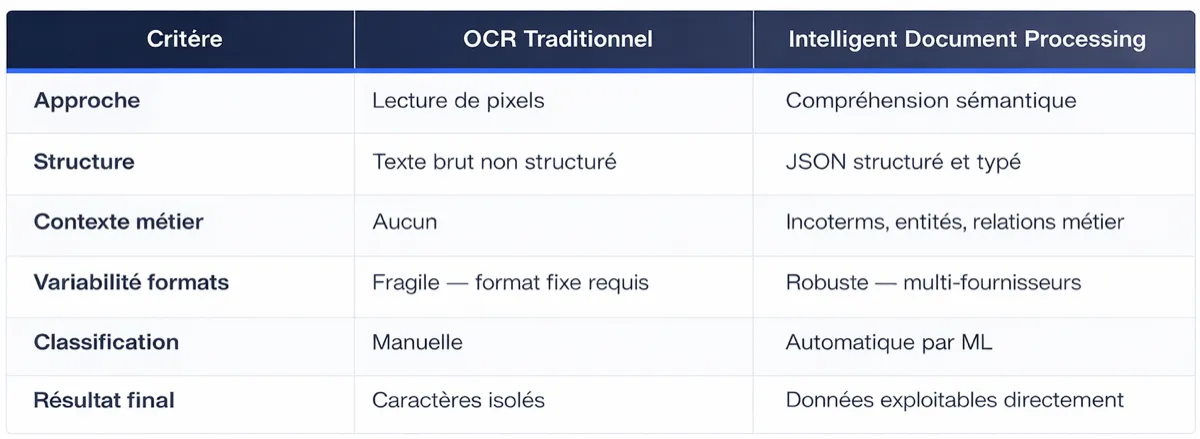
OCR is a proven technology: it reads the characters of a scanned document. But it does not understand. It does not know that an amount is financial, that an abbreviation is an Incoterm, or that a field corresponds to a purchase order in the ERP.
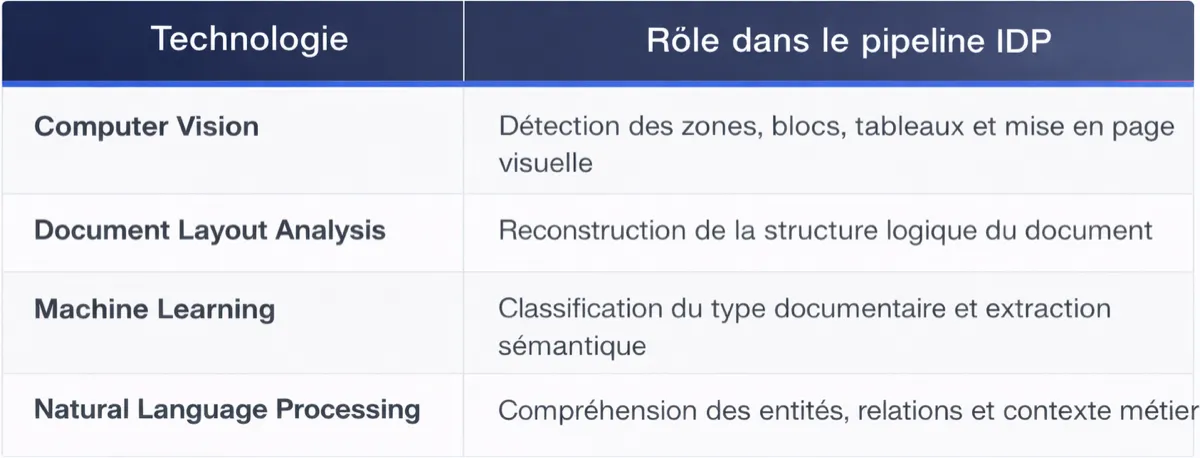
IDP goes further by combining Computer Vision, Machine Learning, NLP and Document Layout Analysis to turn any document into usable structured data.
The 4 technologies at the heart of IDP
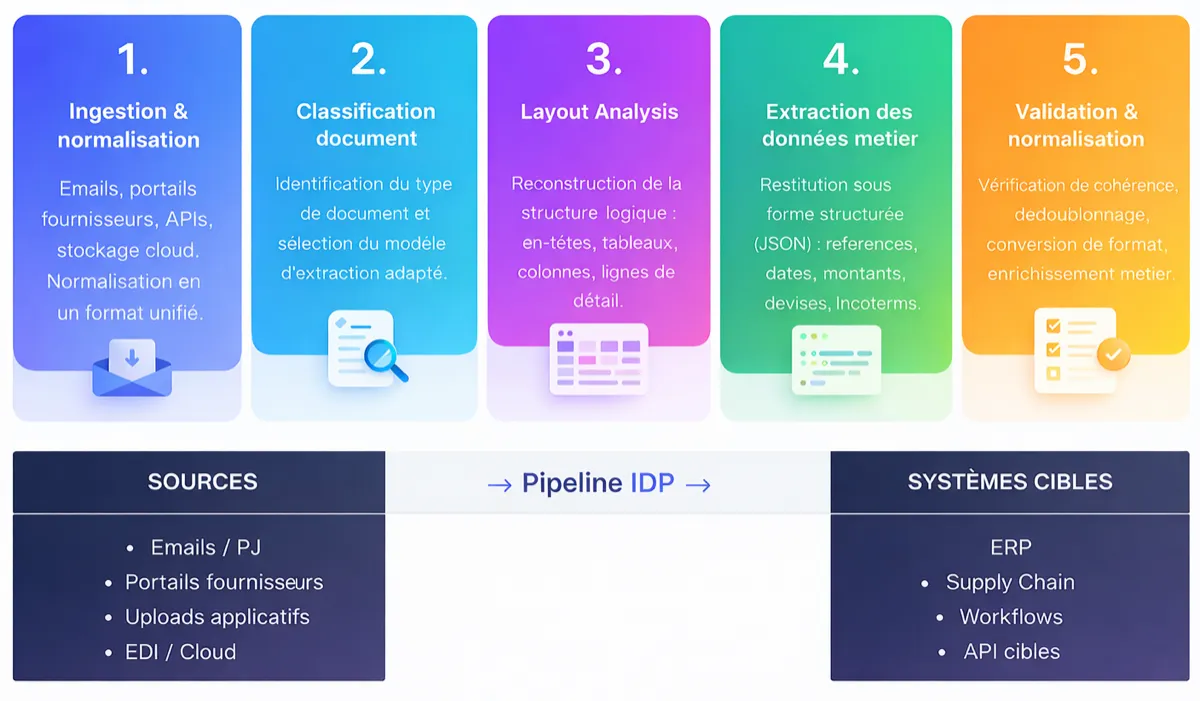
2 - Architecture of an industrial IDP pipeline - Five steps to absorb real-world document variability
3 - IDP applications by sector - Four fields transformed by intelligent document understanding
IDP is not a vertical technology. Its ability to extract meaning from any unstructured document gives it a remarkably broad, cross-sector range of applications. Four sectors illustrate particularly well how deep this transformation goes.
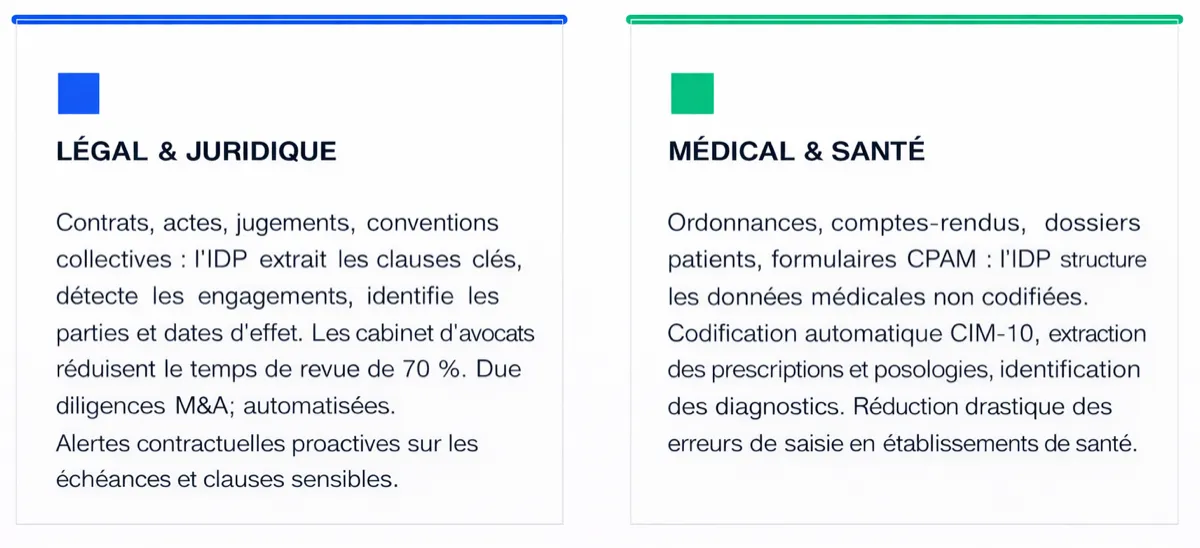
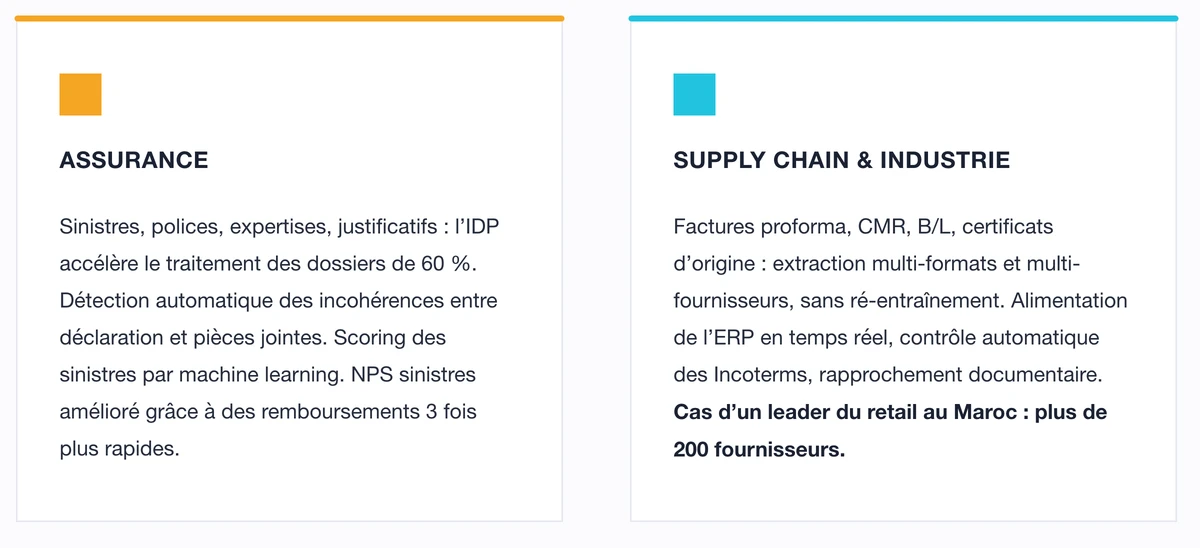
IDP as a universal document infrastructure. Beyond the four sectors above, any field that handles heterogeneous documents — HR, banking, real estate, energy — is a natural candidate for IDP. The question is not “does it apply?” but “what ROI and what architecture for my context?”
4 - IDP vs generative AI - Architecture, comparison and GDPR positioning
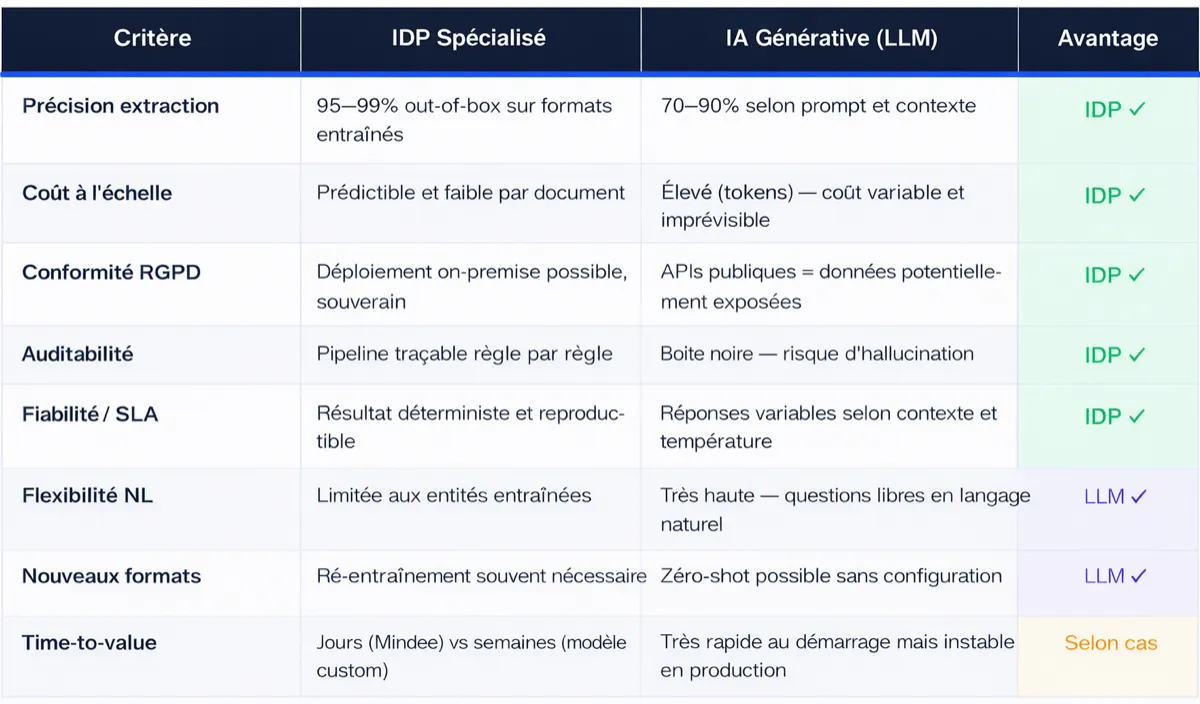
The emergence of LLMs (GPT-4, Claude, Gemini) raises a legitimate question: why invest in a dedicated IDP solution when a general-purpose language model seems able to read any document? The answer is nuanced, and the complementarity of the two approaches is precisely what advanced architectures make use of.
Comparison table — 8 key criteria
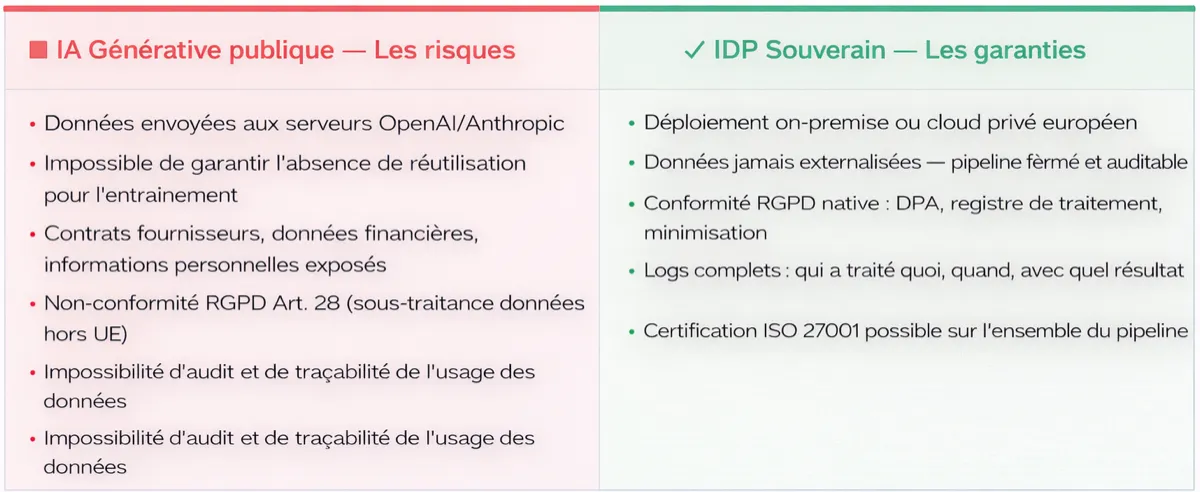
GDPR & security — Why document sovereignty is non-negotiable
5 - Technology benchmark - What we learned - Evaluating the main IDP solutions on real supply chain datasets
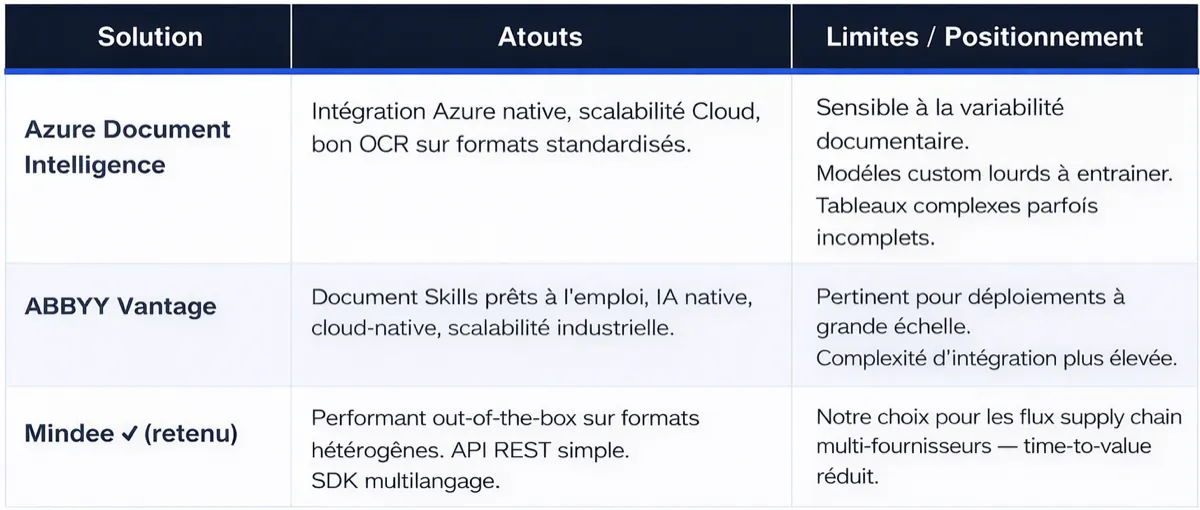
Our choice: Mindee stood out for its reliability on heterogeneous supplier formats and its short time-to-value — extraction up and running in a few days, without systematic retraining.
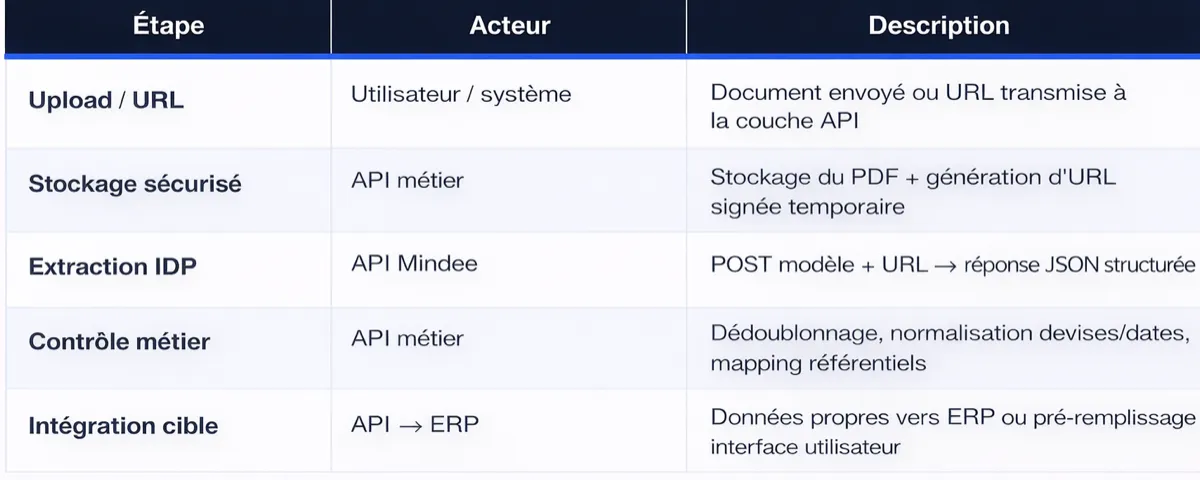
6 - Mindee integration — Technical flow - A simple, secure integration model that can be industrialised
Mindee is integrated following a simple, secure model that can be industrialised. The document is stored, and a signed URL is passed to the Mindee API with the appropriate model.