Blog
Successful CRM–ERP integration: challenges, obstacles and best practices
Use cases, best practices, monitoring and common pitfalls: the keys to integrating your CRM and your ERP successfully with an iPaaS platform.
3 min read
- CRM
- ERP
- Boomi
- Salesforce
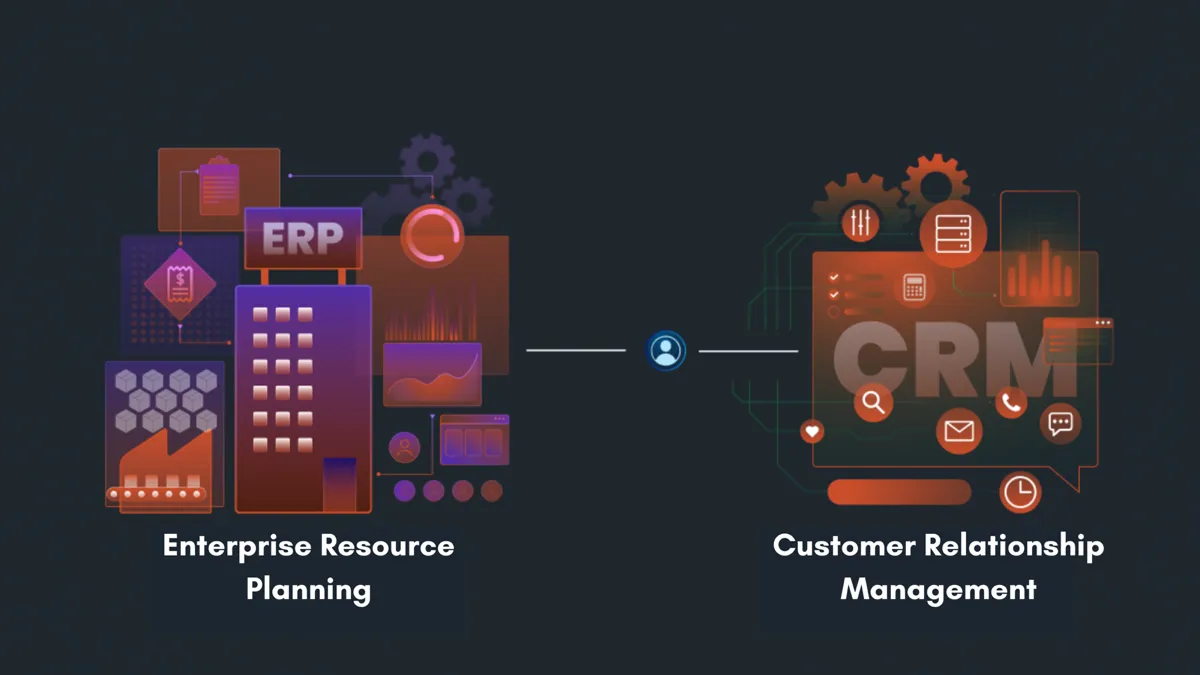
Integrating a CRM (Customer Relationship Management) system with an ERP (Enterprise Resource Planning) system is a strategic lever to optimise business processes, guarantee reliable data and improve the organisation’s overall performance.
Why connect a CRM to an ERP?
ERPs such as Infor M3, SAP or Oracle NetSuite… orchestrate the company’s core functions: accounting, purchasing, production, logistics, etc.
CRMs such as Salesforce, Microsoft Dynamics 365 or HubSpot… are dedicated to customer management processes: prospecting, opportunity management, loyalty.
Integrating these two systems makes it possible to remove data silos, automate exchanges between departments and provide a 360° view of the customer and of operations.
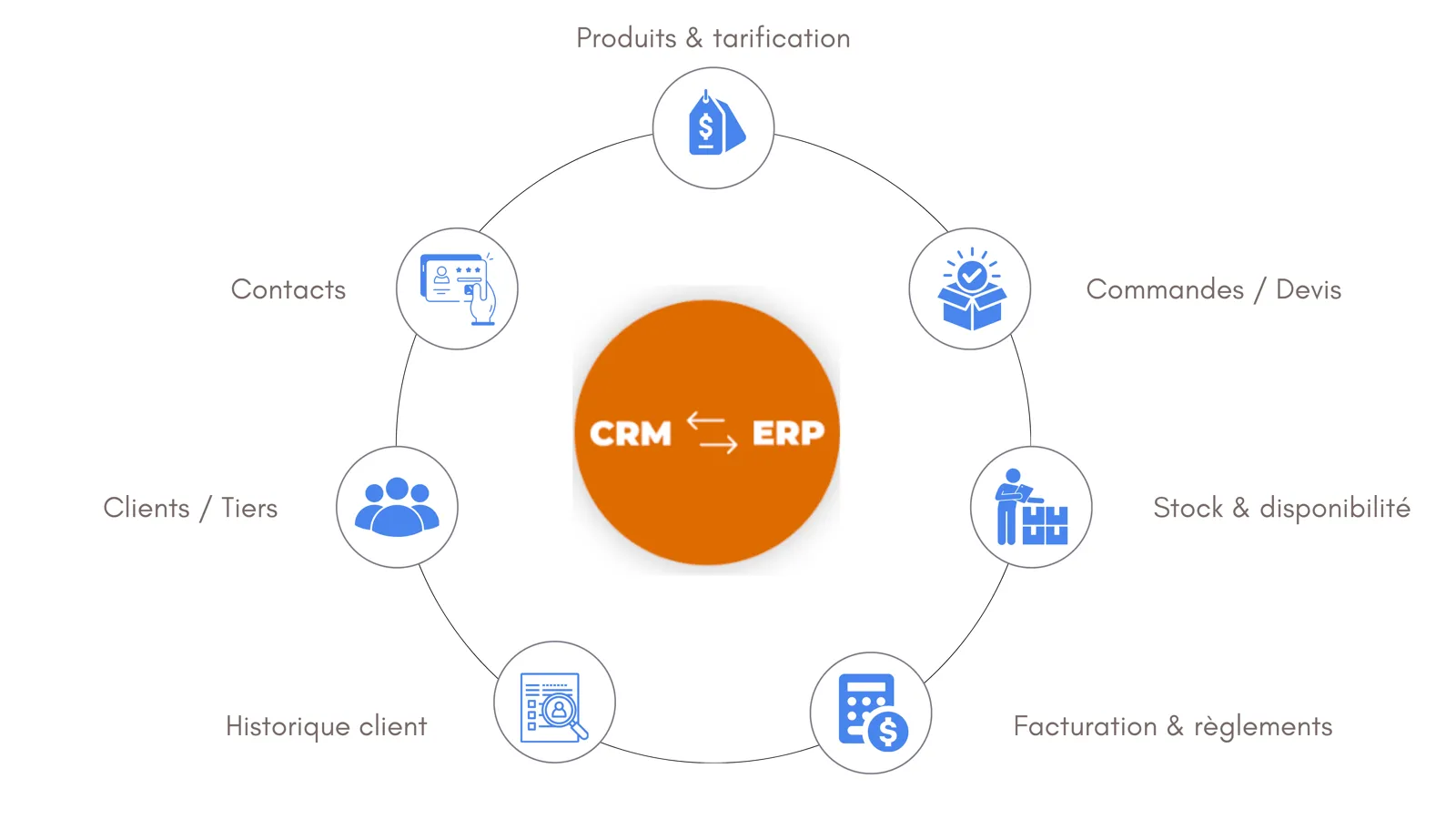
Common CRM – ERP integration use cases:
- Customers / third parties: synchronising identification data, billing terms, categories.
- Contacts: updating sales contacts, job titles and contact details.
- Products & pricing: aligning reference data, price lists and discounts.
- Orders / quotes: smoothly converting opportunities into firm orders.
- Stock & availability: real-time access to available quantities from the CRM.
- Invoicing & payments: tracking invoice statuses, outstanding amounts and payments.
- Customer history: centralising orders, incidents and contract data.
Best practices for a successful integration:
1. Modernise the systems upstream
Complex integrations rely on solutions that are open, modular and well documented. Heavily customised on-premise ERPs or CRMs often bring technical constraints and high maintenance costs. A modernised architecture (API-first, cloud-ready) should be preferred.
2. Choose a solid integration platform
iPaaS platforms such as Boomi offer a modular, scalable and industrialised approach to integration:
- Native connectors for the main ERPs and CRMs on the market.
- Orchestration of real-time or batch flows.
- Low-code graphical interface.
- Monitoring and automatic restart of flows in the event of an error
3. Monitor integration flows
Monitoring flows is essential to keep the integration ecosystem resilient. Centralised oversight provides:
- Full traceability of executions.
- Proactive detection of technical and functional errors.
- A consolidated view of critical flows (orders, payments, customer synchronisations).
- Alerts and decision-making reports for operational teams.
4. Define the data to synchronise upfront
It is essential to map the target data, its formats and the synchronisation rules:
- Master data vs transactional data.
- Priority rules (overwrite, enrichment, delta).
- Flow direction (one-way or two-way).
- Governance and business ownership of each type of data.
5. Plan for the project lifecycle
Integration does not stop at go-live. A successful project includes:
- Technical unit tests and end-to-end tests on business cases.
- Version management of integration flows.
- Upgrade plans with no service interruption.
- Regular audits to guarantee the quality of synchronised data.
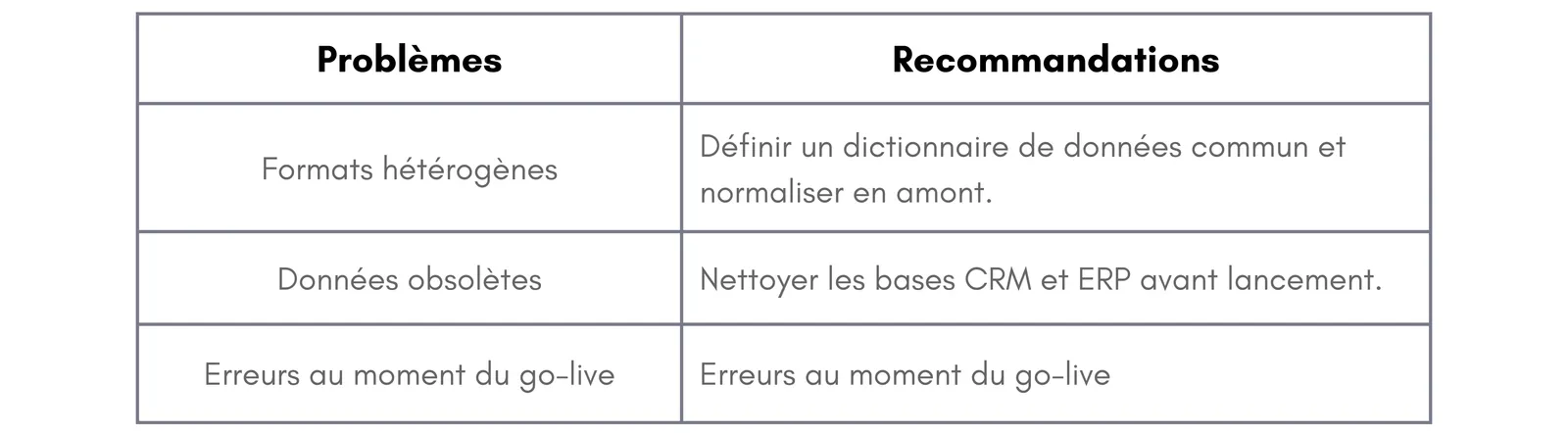
Common problems and solutions:
Concrete benefits of CRM – ERP integration:
- Automation of processes across departments.
- Shorter time-to-quote, smoother sales cycles.
- Consolidated, more reliable data, with no manual re-keying.
- A unified customer view, including history, orders, payments and stock.
- Better forecasting and better commercial and operational management.
- Scalability of the organisation thanks to a connected architecture.
Conclusion:
Integrating CRM and ERP systems is a strategic lever to make processes smoother, centralise data and strengthen real-time decision-making. A successful integration relies on using a proven platform such as Boomi, rigorously defining the scope of the data, and continuous operational monitoring.
We have successfully deployed this approach in complex environments such as retail, logistics and industry, providing concrete answers to interoperability and performance challenges.
Here at We Are Beebay, this expertise leaves no room for guesswork: our command of CRM–ERP integrations is flawless.