Blog
Getting the testing phase of a Boomi integration flow right before go-live
Business logic, mappings, volumes, logs, error scenarios, performance: the checklist for testing a Boomi integration flow before it goes into production.
4 min read
- Boomi
- Tests
- Qualité
- Mise en production
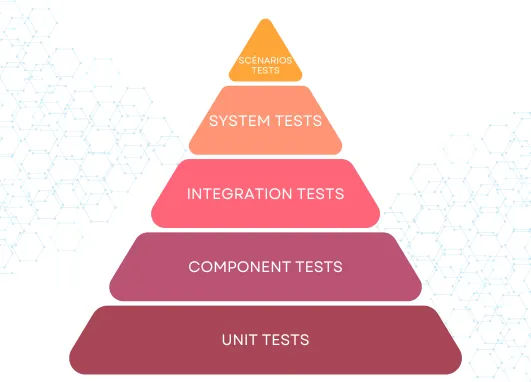
In many integration projects built on Boomi, go-live is a key moment: the point where a flow validated in a controlled environment meets operational reality: real volumes, imperfect data, unforeseen scenarios. It is at this stage that the quality of the testing phase shows its full value.
Drawing on demanding integration projects, our teams have found that a flow that is truly ready for production is not just one that runs correctly in the test environment. It must prove its reliability on realistic data, handle the expected volumes and hold up against exception cases.
Testing a Boomi flow therefore means going beyond technical validation to put its whole behaviour to the test: business logic, data consistency, stability and performance.
In this article, the We Are Beebay experts share the essential best practices for securing integrations as they go into production.
1. Checking the business logic implemented
Before any testing, it is essential to make sure the business rules are correctly implemented in the flow. This avoids logic errors that often go unnoticed.
1.1 Validating Decision Shapes
Decision Shapes determine the path the flow takes according to the conditions defined. It is important to:
-
Test each branch individually
-
Check AND / OR combinations and rule priority
-
Make sure the conditions are neither too broad nor too restrictive
A common risk:
Misreading an OR can lead to incorrect inclusions without causing any technical error.
1.2 Checking complex rules
Complex rules often include EQ/NEQ, IN/NOT IN, multiple combinations or null values. You also need to test:
-
Invisible spaces
-
Case sensitivity
-
Dependent conditions
The most frequent errors are logical rather than technical.
2. In-depth testing of Map Shapes
Mapping transforms the data and is a risk area. Every transformation must be validated to avoid inconsistencies.
-
Check the exact source → target field mapping
-
Check the transformations: concat, substring, split, lookup
-
Review Groovy scripts for possible exceptions
-
Test null handling, default values and formatting (dates, numbers)
-
Check whether automatic trimming is appropriate
A mapping that looks right in Boomi does not guarantee it meets business requirements.
3. Tests based on realistic data sets
A stable flow must work under all possible conditions. You need to test:
-
Nominal cases: data that matches expectations
-
Edge cases: empty fields, unexpected values, maximum length
-
Exclusion cases: records that must not match the conditions
-
Volume cases: from 10 to 50,000 records
A flow that is stable on 10 lines can fail on 10,000.
4. Checking volumes and consistency of results
After execution, it is essential to check that the volumes are consistent and that the flow behaves as expected:
-
Number of records in input, transformed, excluded and in error
-
Number of lists generated or empty
We recommend drawing up a comparison table including:
| Indicator | Input | Output | Difference | Justified? |
|---|
A volume inconsistency is a strong sign of a logic anomaly.
5. In-depth analysis of Boomi logs
Logs give a detailed view of processing and make it possible to identify anomalies quickly.
In Process Reporting:
-
Check every document processed
-
Identify rejected documents
-
Review detailed exceptions
-
Check the modification steps
-
Analyse execution times
Reading the logs carefully is essential to serious testing.
6. Testing error scenarios
A production-ready flow must be able to handle all kinds of errors: badly formatted files, missing columns, corrupted data, unavailable endpoint, API timeout, authentication or network problems.
Observe how the flow behaves:
-
Does the process stop?
-
Is the error logged?
-
Is an alert sent?
-
Does the flow continue partially?
These tests ensure the flow holds up when incidents occur.
7. Validating exclusions and empty lists
Empty lists or unexpected exclusions can reveal logic problems. You need to:
-
Identify and check empty lists
-
Confirm they are legitimate according to the business rules
-
Automatically exclude empty lists if necessary
These checks avoid silent errors and ensure business compliance.
8. Tests in a near-production environment
A flow can work in DEV but fail in PROD if the configuration differs. Before go-live, it is therefore essential to:
-
Test on an environment similar to PROD
-
Check the settings via Environment Extensions, real connectors and credentials
-
Test network access
These tests limit surprises in production.
9. Performance testing
Performance must be assessed to anticipate problems with large volumes. You need to measure:
-
Execution time and memory consumption
-
Ability to process large batches
-
Risk of timeout
For large volumes:
-
Use document batching
-
Test parallel processing
-
Check transaction handling
These tests ensure the flow stays stable under load.
10. Final checklist before deployment
Before promoting a flow to PROD, make sure everything is in order:
✔️ All business rules validated
✔️ Decision Shapes tested
✔️ Mapping checked
✔️ Volumes consistent
✔️ Logs clean
✔️ Exceptions under control
✔️ Business sign-off obtained
✔️ Volume test carried out
✔️ Rollback plan defined
11. Why business validation matters
Acceptance testing must not be purely technical. The business must:
-
Validate the results
-
Confirm the inclusions
-
Confirm the exclusions
Going live without business validation is a major risk.
Conclusion
Getting the testing phase right requires a structured, rigorous and business-focused approach. A flow’s reliability is not just about working correctly from a technical point of view: it depends on its ability to produce consistent, controlled and stable results under real operating conditions.
In practice, our experts rely on advanced qualification methods, combining analysis of behaviour under load, fine-grained exception handling and systematic business validation. This approach significantly reduces risks in production and secures integration platforms over the long term.